
One of the Best Seasons Yet!
After one of the shorter waits between sets, we got an early announce for the next collection boxset in the form of Season 7 – the second earliest in the range to date, leaving just one Pertwee left to be released in his final, Season 11.
Season 7 was notable for being Doctor Who’s debut in colour – though most of the viewing public wouldn’t own colour televisions for some years to come. It also saw the introduction of Third Doctor Jon Pertwee, who, despite coming from a mostly comic background, quickly solidified himself as a more serious portrayal, arguably the most serious of all the classic Doctors.
The start of the 70s came off the back of a decline in ratings for the series, and a need to shake up the format, combined with budgetary concerns, led producer Derrick Sherwin to devise a storytelling technique to bring the series down to Earth and give it a more Quatermass-esque appeal. This leant into the more successful and liked stories of the late 60s like The Web of Fear and The Invasion. This decision would leave the Doctor unable to leave Earth due to his exile at the end of The War Games, and instead find a home assisting UNIT (United Nation Intelligence Taskforce) as their Scientific Advisor, a role that would remain on and off until the mid-1970s. Sherwin would soon leave following the first serial, handing the reigns over to Barry Letts, whose capabilities were seen in previous runs as a director for the likes of The Enemy of the World, whilst Terrance Dicks would formally step into his position as Script Editor after working on the series from season 6, and this pairing would be one of the greatest in Who history.
A wise decision was also made for Season 7 to reduce the number of episodes this season from the whopping 40+ seen during the preceding few down to 25, done so to combat the excessive strain on Pertwee that Troughton saw during his run, though the result here is one four-parter and three seven-part serials, each of which could arguably lose an episode but still, Season 7 is both one of the most beloved and serious seasons of Doctor Who, feeling distinctly mature and (literally) grounded in its storytelling.
Spearhead from Space
Spearhead from Space is notable for being the only Classic Who serial to be entirely filmed on 16mm, versus the usual videotape (and sometimes filmed inserts), this was due to behind the scenes issues (namely an industrial strike) that led to some quick thinking to get the story made and secure the first four episodes of the season, resulting it being truly unique and special in this regard, but also thanks to the winning script by Robert Holmes, who would hit a solid streak for most of the rest of his time writing for the series.
The story focuses on the Doctor, now banished to Earth, newly regenerated and confused, eventually being reunited with a familiar face in Alistair Gordon Lethbridge-Stewart (Nicholas Courtney), better known as the Brigadier, who has his hands full trying to determine the origins of a shower of meteors that crash-landed in the English countryside, all whilst trying to recruit Dr. Elizabeth “Liz” Shaw (Caroline John) as a scientific advisor to help with the case.

This leads to the introduction of the Nestene Consciousness, a non-physical being capable of animating inanimate objects, in this instance plastic mannequins and waxwork dummies, with an intent to replace key government and military figures with Autons, in a bid to presumably control the world, using a toy factory as cover. Owing to the post-regeneration state of the Doctor, we do get some hijinks here and there that perhaps lean more into Pertwee’s comedy background than we’d see again for the most part during his era, including the Doctor escaping being kidnapped by facsimile doctors.
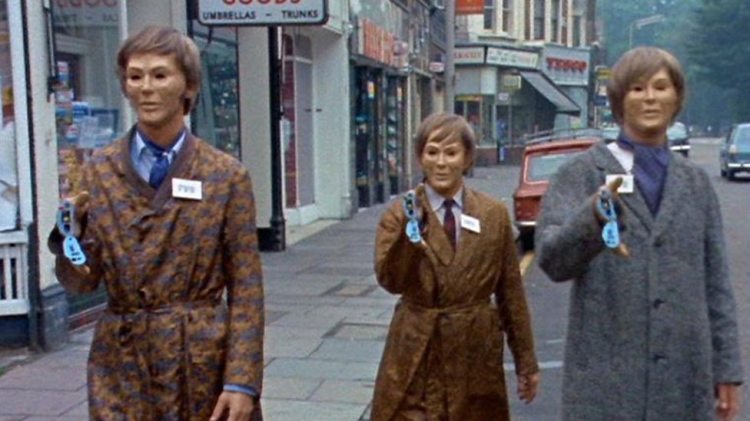
Despite some comedy turns, there are some distinctly horrific moments here, including the iconic awakening of shop-window dummies breaking free of their displays and murdering innocents in the streets, imagery that remains rather brutal today, and an idea that would take centre stage when Doctor Who returned to screens in 2005 with Rose. By the end of the serial, the Doctor is provided with a new companion/assistant in Liz Shaw, whose presence in the season saw less leaning into the “what’s that, Doctor?” archetype and instead almost gave the Doctor a human equal which fit well for this set of stories but didn’t have the legs in the long run, hence the replacement for Season 8 and its lighter tone in Katy Manning’s Jo Grant.
I love SFS, it was my introduction to the Pertwee era thanks to the 2001 DVD release, and would also become the first classic Who story to receive the Blu Ray treatment back in 2013 – something many expected (myself included) to be a one-off.
4/5

Doctor Who and the Silurians
Yes, that’s the title – it was accidentally broadcast as such based on the script working title and was a mistake not repeated again, but retained all these years later as a one-off titling misfire.
What isn’t a misfire though is the actual story, which sports great guest actors including Peter Miles, Paul Darrow, and Fulton Mackay of “Porridge” fame, and the introduction of the Silurians, an intelligent race of Reptilian beings who ruled Earth before humans evolved.

The Doctor and Liz are called out to an English Moorland to visit an underground cave system which has become home to a nuclear-powered cyclotron facility, where the hopes of producing cheap energy for all are being hindered thanks to numerous employees seemingly suffering mental breakdowns and unknown mysterious injuries. As the story unfolds, we gradually see more of the Silurians, who are cleverly only shown in shadows or drawings, with an arm here and their line of vision looming towards someone there. Their menace soon becomes tragedy as the Doctor learns of their plans to sabotage the facility with the help of an insider sympathetic to their cause.
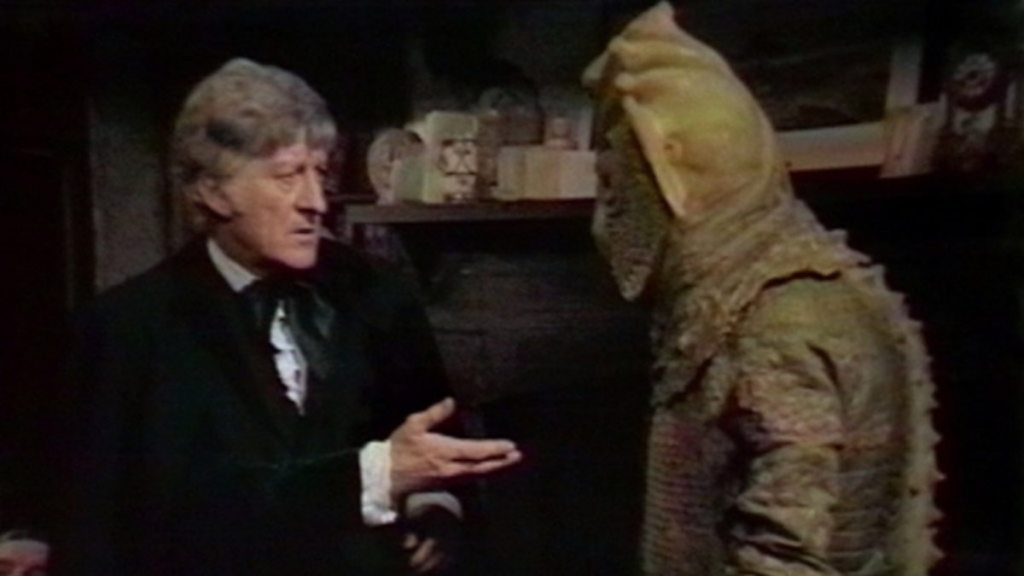
Attempts to reason and bargain with the Silurians fail when their more reasoned leader is usurped, and the reptiles instead attempt biological warfare by spreading a deadly virus across Britain (familiar…). Despite their gambit, the Doctor still tries to give them a chance by resuming their slumber, which is revealed to have been interrupted by the mining in the area. The ending of The Silurians is a gut punch as, even with these peace-keeping efforts, the Brigadier reluctantly orders the caves to be blown up at the behest of the military, and the resulting genocide leaves the Doctor disgusted and helpless to have stopped it, driving away in Bessie having failed to stop the bloodshed.
Overall, Silurians is a great slow-burner but does perhaps feel overlong with the seven-episode length. The introduction of the virus later on into the story, though timely, does feel like an attempt to keep the narrative going for a few weeks, but the Silurians are well-designed and well-realised monsters, and the conflict is well-handled. It’s a shame the Silurians have had such a flawed legacy since, only returning 14 years later for the maligned Warriors of the Deep during the classic era, and being given a lacklustre presence (and redesign) in the new.
4/5
The Ambassadors of Death
From beneath the Earth to beyond the stars – TAO(Twang)D focuses on a missing probe travelling to Mars and the attempts to make contact after eight months of silence. Matters quickly escalate when the two astronauts who manned the probe return to Earth and are abducted by a general, Charles Carrington (John Abineri), under the guise that they’ve been infected by radiation and thus must be kept from the public’s eye.
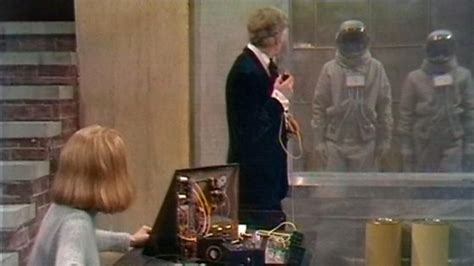
Naturally, the Doctor smells a rat, or rather an alien, and suspects these astronauts are actually aliens and that the real Mars Probe personnel are still in space and in need of rescuing. What makes this relatively straightforward story special includes some great action sequences from the HAVOC stunt team and director Michael Ferguson, an underrated actor and some very memorable and nuanced supporting characters.
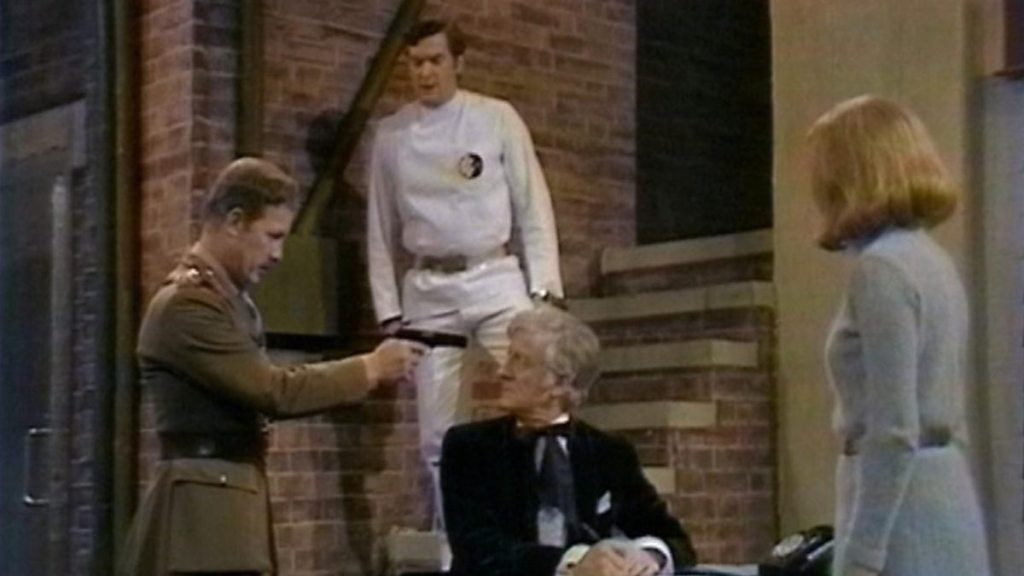
This is also the first story to properly experiment with the cliffhanger sting, which would become commonplace until the series concluded in 1989. Dudley Simpson also provides one of his finest scores for Who, second only to City of Death some years later. Overall, this is another winner for Season 7, and it also reintroduces Sergeant Benton (John Levene) to the Unit family.
4/5
Inferno
Considered one of the finest stories of the Pertwee era, Inferno focuses on Project Inferno, wherein a team of scientists are trying to drill through the crust of the Earth in order to utilise the energy held within the planet’s core. Matters are soon complicated owing to green ooze coming through thanks to the drilling, which reverts people to a savage and primeval state of being, dubbed Primords. The Doctor finds himself at odds with the antagonistic and single-minded Professor Stalhlman, who not only overrides his warnings that the drilling could have dire consequences but also takes away his access to the nuclear power being provided to power the disconnected Tardis console.
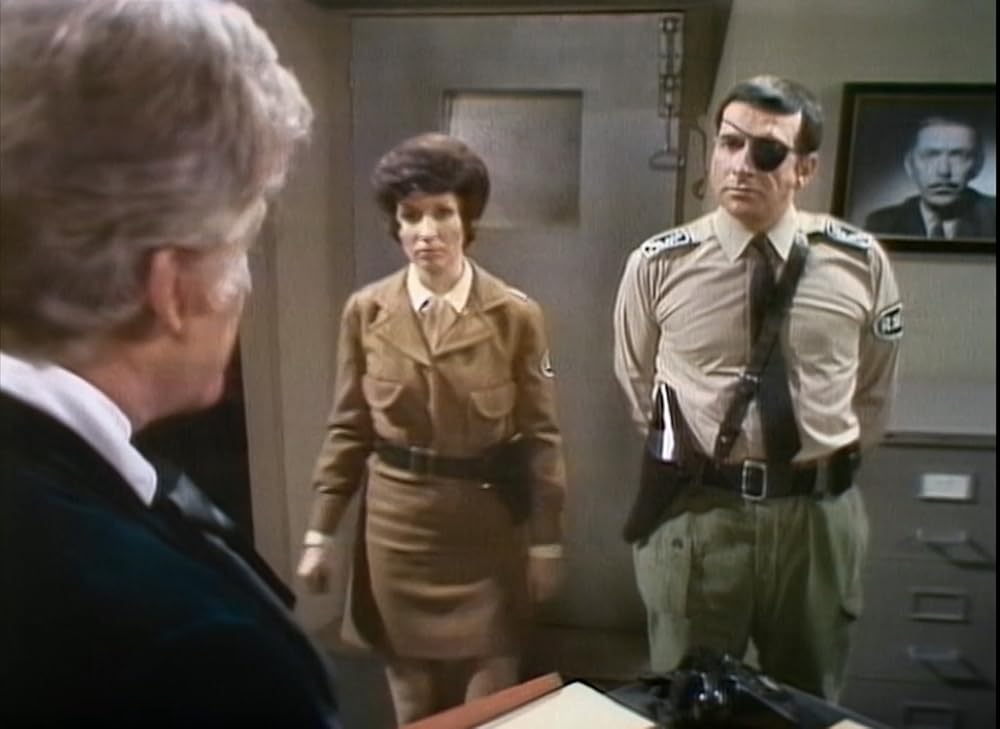
The Doctor takes matters into his own hands to get his console working again, but when Stahlman disconnects the power again and a test goes awry, he finds himself transported to an alternative parallel-universe Earth. This parallel Earth is home to decidedly evil counterparts of the UNIT family as a fascistic reversioning of Britain has the Brigadier sporting an eyepatch and a sadistic streak, whilst Liz’s counterpart has joined the military as an officer – something the Liz we know would never dream of.
The sense of imminent danger throughout Inferno never lets up once the parallel Earth enters the picture, as everyone is against the Doctor, and by the time he has any allies, the consequences of the drilling have reached a literal boiling point (as teased in the title cards). The tension also builds back on our Earth as Stahlman becomes more and more mentally unstable due to becoming infected by primordial ooze, which comes to a head in the final episode.
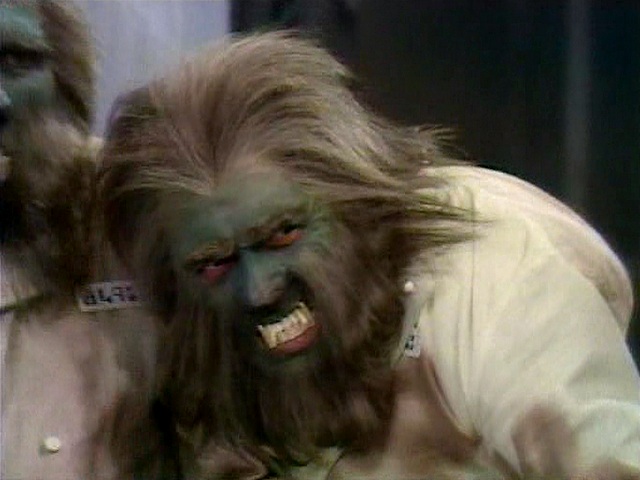
Notably, Caroline John also gets more to do here as an evil counterpart, and it’s a shame this is the last we see of the character, except in cameos. Overall, Inferno manages to be the best story in one of the all-time great seasons, and it’s hard to find something new to praise (or criticise excepting the Primoids looking a tad silly) about it – it’s just fantastic, and Douglas Canfield and an uncredited Barry Letts provide some superb and claustrophobic direction throughout.
4.5/5

Overall:
Best Story: Inferno
Worst Story: Doctor Who and the Silurians (still a great story, just the weakest in a very strong season).
Must see: All of it!
Check out Part Two, where we unbox the set, look through the video & audio quality, discuss the special features, and give an overall rating.
By HW Reynolds
Images provided by the BBC
 Reverbium
One thought