
Are We In For Another Great Season?
After over five years, we finally return to the Hinchcliffe era with Season 13 entering The Collection range.
Season 13 is where producer Philip Hinchcliffe and script editor Robert Holmes truly found their zeitgeist in these roles, as 12 was a product of being caught between this team and the preceding Pertwee era sensibilities. With UNIT being almost absent and an altogether more horror-focused approach, plus a winning combination of Tom Baker’s Fourth Doctor and Elisabeth Sladen’s Sarah-Jane Smith, S13 has endured as one of the finest of the entire classic era. Naturally, I was keen to revisit it after all this time, and for the most part, I’d say opinions are spot-on here.
Terror of the Zygons
Initially meant to conclude Season 12, this story set in the Scottish Highlands was held back to be the season opener for Season 13 instead. It sees the Doctor, Sarah, and Harry Sullivan (Ian Marter) return to Earth at the behest of Brigadier Alistair Gordon Lethbridge-Stewart (Nicholas Courtney) after an oil rig in the North Sea unexpectedly collapses.

As the TARDIS team investigates, Harry is shot unexpectedly and then goes missing from his hospital bed. The Doctor reckons the oil rig (soon plural) was taken down by a giant creature, and the Doctor utilises a signalling device he discovers to track the creature, known as the Skarasen, down to Loch Ness, no less. Meanwhile, it is realised that Harry was kidnapped by shape-shifting beings known as the Zygon, who mimic human appearances to infiltrate positions of power and terraform the Earth to their needs from their base beneath Loch Ness.
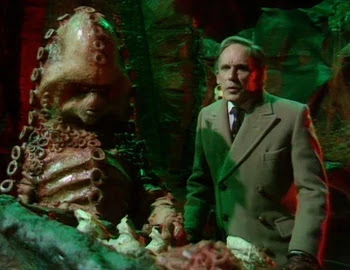
As a story this is a corker, Douglas Camfield’s direction is sublime, the regulars are on fine form, with final regular appearances here from Nicholas Courtney and Ian Marter, whose companion character Harry leaves at the end of the story (sadly the character just wasn’t needed for the younger fitter actor the Fourth Doctor ended up with) plus John Levene as Sergeant Benton, though he will reappear later on this season. The Zygons are also a great monster who, for the longest time, were a one-off until the 50th anniversary special and then the Capaldi era.
4/5

Planet of Evil
The Doctor and Sarah land on the planet Zeta Minor, at the edge of the galaxy, in response to a distress call, only to discover a team of geologists, or rather what’s left of them, as another team arrives seeking to exploit the antimatter minerals on the planet.

Of course, the duo are quickly blamed for the deaths that have occurred, but they also discover the planet is home to its own defences, including the possession of one of the scientists in a Dr. Jekyll and Mr. Hyde scenario, and pure energy in a physical form looming throughout the story.

As a story, this is straightforward, but the idea of tampering with an antimatter planet by taking its minerals and potentially unbalancing the universe in cataclysmic fashion is a great premise. PoE also has some of the finest set work in the entirety of DW history, with a lush and impressive alien jungle set that to this day I don’t think has quite been surpassed. An underrated story from the era.
4/5
Pyramids of Mars
Set in 1911 Egypt, this serial focuses on an archaeologist, Marcus Scarman (Bernard Archard), who leads an expedition to excavate a pyramid and retrieve a sarcophagus. This discovery has links to an alien threat from Mars, Sutekh (Gabriel Woolf), who was once defeated and then imprisoned by the God of Light, Horus and 740 other Gods during ancient times. His attempts to return and free himself mark a deadly threat to the universe and must naturally be stopped as a result.
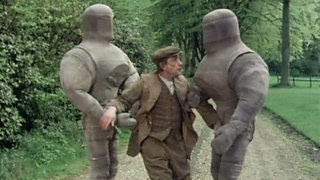
This is a story steeped in influence from the Mummy and Egyptology, with Sutekh being one of the most memorable classic era villains – Woolf’s vocal performance being especially chilling, as well as the presence of the robotic Mummies, which are a looming threat. Robert Holmes and Lewis Greifer (credited under the pseudonym “Stephen Harris”) produce a superb script which paces nicely across the four episodes, and some memorable quotes “I bring Sutekh’s gift of death” “kneel before the might of Sutekh”, as well as one of the great scenes in classic Who wherein the Doctor shows Sarah what would be left of the earth if Sutekh gets his way.

Sutekh would return in the first of two gravely disappointing finales of the Ncuti Gatwa era, still voiced by Woolf, and a special Tales of the Tardis edition of this story was put together to celebrate the occasion, which is provided for this box set.
It’s easy to understand why this story is so beloved – back in the day, it was voted the number one most requested story to be put out on DVD, which it did so back in 2004. This is a story that’s hard to find much fault in, especially with Paddy Russell’s fine direction and the central cast on fine form.
4.5/5

The Android Invasion
Terry Nation returns as story writer here in a rare non-Dalek outing, with the Doctor and Sarah returning to Earth via the village of Devesham, wherein the town’s citizens have all been replaced by androids as part of an experiment by the alien Kraals, who plot to wipe out the Earth’s population with a deadly virus.

After three very strong serials, this perhaps feels a bit lesser in comparison – for me comes down mainly to a misuse of established characters like Harry Sullivan and Sergeant Benton, who are mostly wasted here, but also because the Kraals are rather dull and their design/masks decidedly naff.

The Invasion of the Body Snatchers influence is a worthy idea to base a DW serial upon, but overall, despite having some solid direction from Barry Letts (his final directed serial), this isn’t one of the stronger serials of the Hinchcliffe era, which, mind you, still puts it above some of the Graham Williams era’s worst offerings.
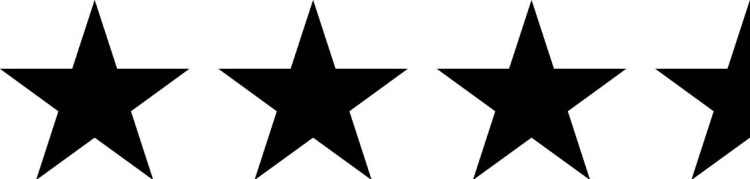
3.5/5
The Brain of Morbius
From Body Snatchers to Frankenstein, this serial sees the Doctor and Sarah whisked away to the planet Karn, inhabited by the Sisterhood of Karn, but also a mad scientist, Solon (Philip Madoc), who is attempting to revive his master Morbius (Stuart Fell as the body, Michael Spice as the voice), whose existence remains only as a Brain.
As it turns out, Morbius and his assistant Solon have been killing those who crash land on the Planet to raid body parts to complete a new body, but with numerous failures. This leads to them wishing to acquire the Doctor’s head to complete the body, all whilst the Sisterhood of Karn steal the Tardis, under the misapprehension of the duo wishing to steal their elixir of life, having caused the crashes in the first place.

TBoM on paper is a solid story but does have its issues – the idea of a genius scientist like Solon creating such a mismatched body for Morbius seems a bit unbelievable, whilst the original story had Solon be a robot gone made, which makes a lot more sense – I can see why writer Terrance Dicks wished to have his name removed from the story (hence Robin Bland).
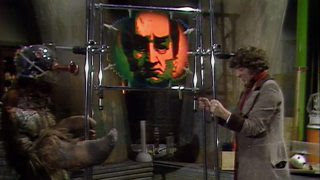
I did enjoy the Sisterhood, though, and their reappearance alongside Paul McGann decades later was an inspired choice too. Perhaps the most controversial element of this serial comes from the Doctor and Morbius facing off in a battle of minds, wherein it is seemingly revealed that there were pre-Hartnell Doctors. Until The Timeless Children aired, growing up, I had assumed those were Morbius’ past incarnations, having been a Time Lord and a criminal in his past life. As is, I found this retcon awful, and though it doesn’t tarnish my overall view of the story, this is another one of the Hinchcliffe-era offerings for an otherwise very strong era.
3.5/5
The Seeds of Doom
The Doctor agrees to one final favour as UNIT scientific advisor as he and Sarah visit an Antarctic base after a mysterious pod is found. Naturally, the pod comes to life, having been removed from long dormancy and infects a member of the base.
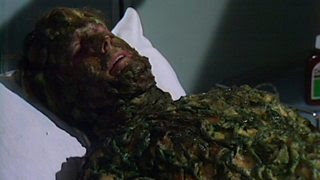
As the crew member’s infection spreads beyond help, the man fully transforms into a Krynoid, a deadly “Galactic Weed” that, instead of being eaten by larger animals, eats back and conquers, with potentially devastating consequences.
To complicate matters, as the crew finds a second pod, kleptomaniac recluse millionaire, Harrison Chase (Tony Beckley), is also after this second pod, commandeering his fist-focused lackey, Scorby (John Challis) and expert Botanist Arnold Keeler (Mark Jones) to take it for his personal collection under the guise of helping the crew.

TSoD is a corker of a season finale, taking the action from the Antarctic to Chase’ mansion (filmed at Athelhampton House) and providing a fantastic threat with the Krynoid and its various forms, and though not every form is as effective as the other (the wobbling mattress form springs to mind) the reuse of an Axon costume sprayed green, and especially the final giant form that consumes Chase’ mansion is a great special effect.

Douglas Camfield returns to direct what would be his final contribution to Who before his untimely death, and it’s a great one to end on, with great settings, action and casting to boot – Tony Beckley is great as the main human threat whilst John Challis is given a solid character arc as he realises his mistakes in backing Chase.

Perhaps the only downside is that no UNIT alumni appear for the final action sequences, with generic soldiers popping in instead – a missed opportunity to properly say goodbye to the UNIT era before it was written out completely. Otherwise, a superb story and the strongest in a rightfully lauded season.
4.5/5
Overall:
Best story: The Seeds of Doom
Worst Story: The Brain of Morbius (More, the least of a very strong lot)
Must see: All of it!
Check out Part Two, where we unbox the set, look through the video & audio quality, discuss the special features, and give an overall rating.
By HW Reynolds
Images provided by the BBC
 Reverbium
One thought